 EN
EN
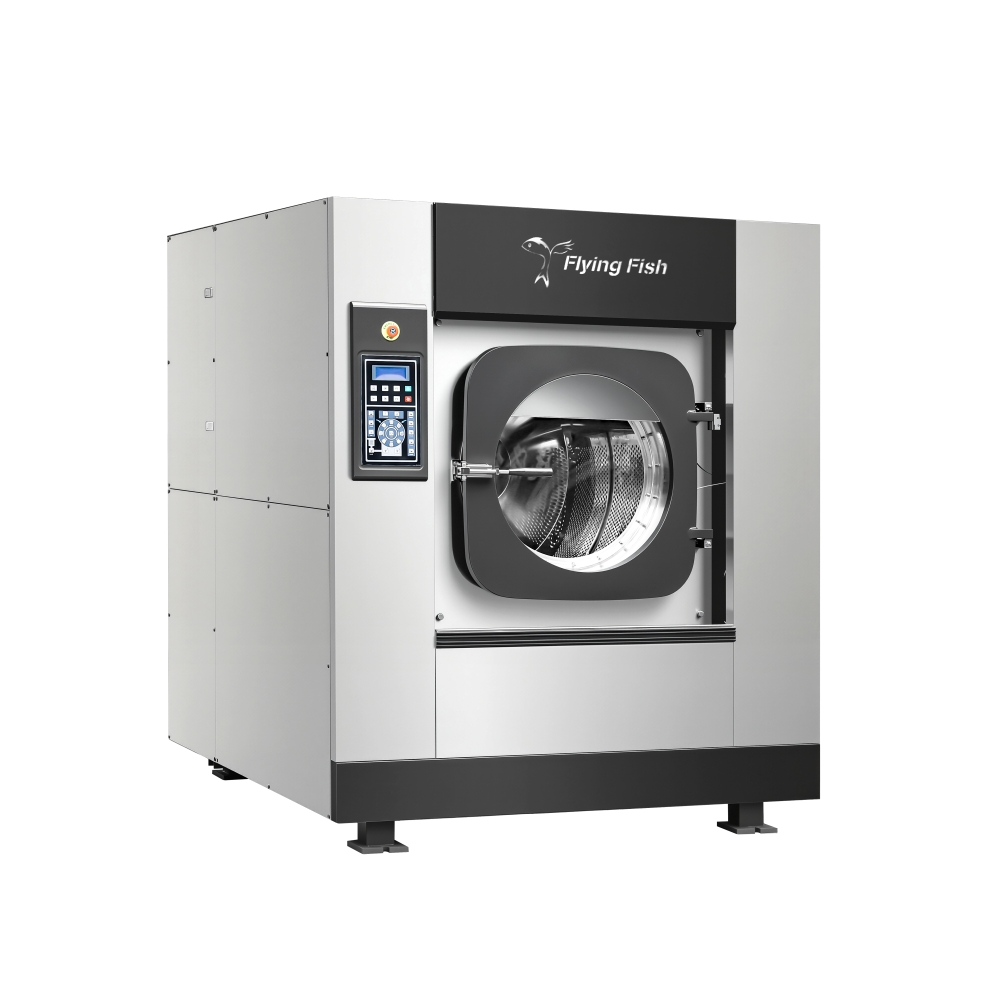
When it comes to laundromat operations, the cycle time of washers is a key factor influencing both customer satisfaction and business efficiency. As a leading provider of commercial laundry solutions, Flying Fish has designed standard laundromat washers that balance cleaning performance, energy efficiency, and cycle speed to meet the diverse needs of laundromat owners and users worldwide. In this blog, we explore the typical cycle time of a standard laundromat washer, the factors affecting it, and how Flying Fish’s equipment optimizes this process.
Typical Cycle Time of a Standard Laundromat Washer
A standard laundromat washer, built for daily use and moderate loads of regular clothing, generally takes 40to 60 minutes to finish a full cycle. This duration covers six essential stages: washing, spinning, rinsing, spinning, rinsing, and spinning.
The washing stage, responsible for removing dirt, stains, and odors, accounts for 10 to 25 minutes. Flying Fish’s Vended Washer Extractor (available in 15KG, 20KG, and 25KG capacities) uses precise drum rotation speeds to ensure effective cleaning without damaging fabrics, leveraging mechanical agitation and detergent to break down contaminants.
Rinsing follows to eliminate detergent residues, with 2 cycles each lasting 5 minutes, totaling 10 minutes. This step is critical—leftover detergent can stiffen fabrics, irritate skin, and shorten clothing lifespan. Flying Fish’s washers are calibrated to control water flow and drum movement, ensuring thorough rinsing without waste.
The spinning stage, which extracts excess water to reduce drying time, is divided into three phases: the first two phases each last 1 minute, and the final phase takes 5 minutes. Many of Flying Fish’s models feature high-speed spin capabilities, removing up to 70% of water from loads, speeding up the overall process and saving energy for subsequent drying.
Factors That Influence Cycle Time
While the typical cycle time ranges from 45 to 60 minutes, several factors can cause variations.
Load Capacity
Overloading a washer restricts drum rotation, reducing cleaning and rinsing efficiency. This forces the machine to adjust cycles, extending time. Underloading, by contrast, is also not recommended—as all essential stages must still be completed, it rarely shortens cycles significantly. Flying Fish provides clear load guidelines: its 15KG to 25KG models are designed exclusively for laundry items such as jeans, shirts, and undergarments, while models of 30KG and above are suitable for heavier items including bed sheets and duvets. Adhering to these guidelines maintains consistent cycle times and cleaning results.
Fabric Type and Soil Level
Lightly soiled, delicate fabrics (cotton t-shirts, polyester blouses) may shorten the washing stage by 5 to 10 minutes. Heavily soiled items (oil-stained work clothes, sweaty gym gear) require longer washing or extra agitation, adding 10 to 15 minutes. Flying Fish’s washers offer programmable options: the default “Standard Wash” follows the 45-60 minute cycle, while a “Light Wash” program for lightly soiled clothes completes in 35 to 40 minutes, balancing speed and performance.
Detergent Type and Dosage
High-efficiency (HE) detergents, formulated for low-water systems, dissolve quickly and produce less suds, streamlining cleaning and rinsing. Non-HE detergents or excessive dosage create excess suds, forcing extra rinse cycles and extending time by 10 to 15 minutes. Flying Fish recommends HE detergents and provides dosage guidelines on control panels to avoid such issues.
How Flying Fish Optimizes Cycle Time
With over 20 years of experience, Flying Fish designs standard laundromat washers to deliver efficient, reliable performance, focusing on smart technology and ease of use.
Smart Engineering for Efficient Cleaning
Flying Fish’s washers feature unique drum designs that maximize contact between clothes and washing solution, reducing the time needed for effective cleaning. A multi-layer protection system prevents mechanical malfunctions (e.g., drum jams, water flow issues) that cause delays, ensuring consistent 45-60 minute cycles and minimizing downtime for laundromat owners.
Energy Efficiency Without Extending Cycles
Unlike some energy-saving washers that slow cycles to cut consumption, Flying Fish uses innovative technology to reduce energy use without increasing time. Most models are equipped with 2.2KW energy-efficient motors, and variable-speed motors in Vended Washer Extractors adjust power based on load size and fabric type. These motors deliver strong performance during washing and optimize spin speed for water extraction, using 40% less energy than traditional models while maintaining standard cycle times.
User-Friendly Controls
Flying Fish’s washers feature intuitive microcomputer control panels that display clear cycle time estimates for each program. Users can easily select settings—switching from “Standard Wash” to “Light Wash” updates the estimate in real time—helping them plan their schedules. Laundromat owners can also adjust settings like the number of rinse cycles to meet customer needs without significant time changes.
Conclusion
A standard laundromat washer’s cycle time is pivotal to business success. A consistent 45-60 minute cycle lets customers finish laundry quickly while allowing owners to maximize equipment usage.
Flying Fish’s Vended Washer Extractor series embodies this balance, combining smart cleaning technology, energy efficiency, and user-friendliness. By considering load capacity, fabric type, and detergent use, laundromat owners can further optimize cycle times and enhance customer satisfaction.
As a global leader with a presence in over 120 countries, Flying Fish continues to innovate commercial laundry solutions. Focused on sustainable operational excellence, the company helps laundromat owners worldwide achieve efficient, profitable operations—one reliable cycle at a time.