
Miért tartozik egyetlen állomásos ágynemű-adagoló a mosódájába
Már elegen van a kézi terítésből, amely lelassítja vasalószalagját? Nézze meg, hogyan segíthet egyetlen munkás által kezelt ágynemű-terítőgép a Flying Fish-től közepes méretű kereskedelmi mosodáknak csökkenteni a munkaerő-költségeket és lépést tartani a napi mennyiséggel.
Minden kereskedelmi mosoda ugyanarra a falra ütközik. A mosógépek és szárítógépek automatizáltak, de a szárítás és a vasalás közötti lépés? A legtöbb közepes méretű üzemben még mindig kézi.
Két dolgozó műszakonként. Minden ágyneműt kibontanak, kézzel igazítják a széleket, és darabonként, egyenként táplálják be a vasalóba. Működik. De lassú, munkaerő-igényes, és nyolc órás műszak alatt fizikailag kimerítő.
Azoknak a mosodáknak, amelyek naponta 500–2000 darabot dolgoznak fel, itt romlik el az hatékonyság. Nem a mosási ciklusban. Nem a szárításban. Hanem a kocsik és a vasaló között elvesztett percekben.
Egy ágynemű-feszítő gép veszi át a betáplálási lépést. A munkás egy ágyneműt helyez a betáplálóba. A gép kifeszíti, kiegyenlíti a széleket, majd közvetlenül a mögötte lévő hengeres vasalóba továbbítja. A hajtógép a másik végén fogadja a vasalt textíliát.
Az eredmény egy egyenes vonalú folyamat: szárítás, betáplálás, vasalás, hajtás. Nincs ismételt kezelés. Nincs ide-oda járkálás a termeken.
Többállásos feszítőgépek léteznek nagy kapacitású ipari üzemek számára, de ezekhez szükség van a padlóterületre, tőkére és személyzetre, amellyel a legtöbb kereskedelmi mosoda nem rendelkezik. Az egyállásos betápláló kitölti ezt a hiányt. Automatizálja a szűk keresztmetszetet anélkül, hogy túlbonyolítaná a beállítást.
A Flying Fish GSB-3300 kereskedelmi mosodák számára készült, amelyek 3–15 fős személyzettel működnek. 3300 mm-es munkaszélessége kezeli a szokásos szállodai ágyneműket, banketti textíliákat és nagyobb egészségügyi textíliákat. A sebesség szabható, így a munkások lassíthatnak a nehéz pamutnál, vagy gyorsíthatnak a könnyebb poliészter keverékeknél.
A gép normál műszakokban egyoperátoros üzemmódban működik. Egy személy tölti fel a lapokat az előlapon. A tápláló egység egyenesen visszajuttatja őket a vasalóba. Ez a beállítás kezeli a tipikus napi mennyiségeket anélkül, hogy további munkaerőt kötné le.
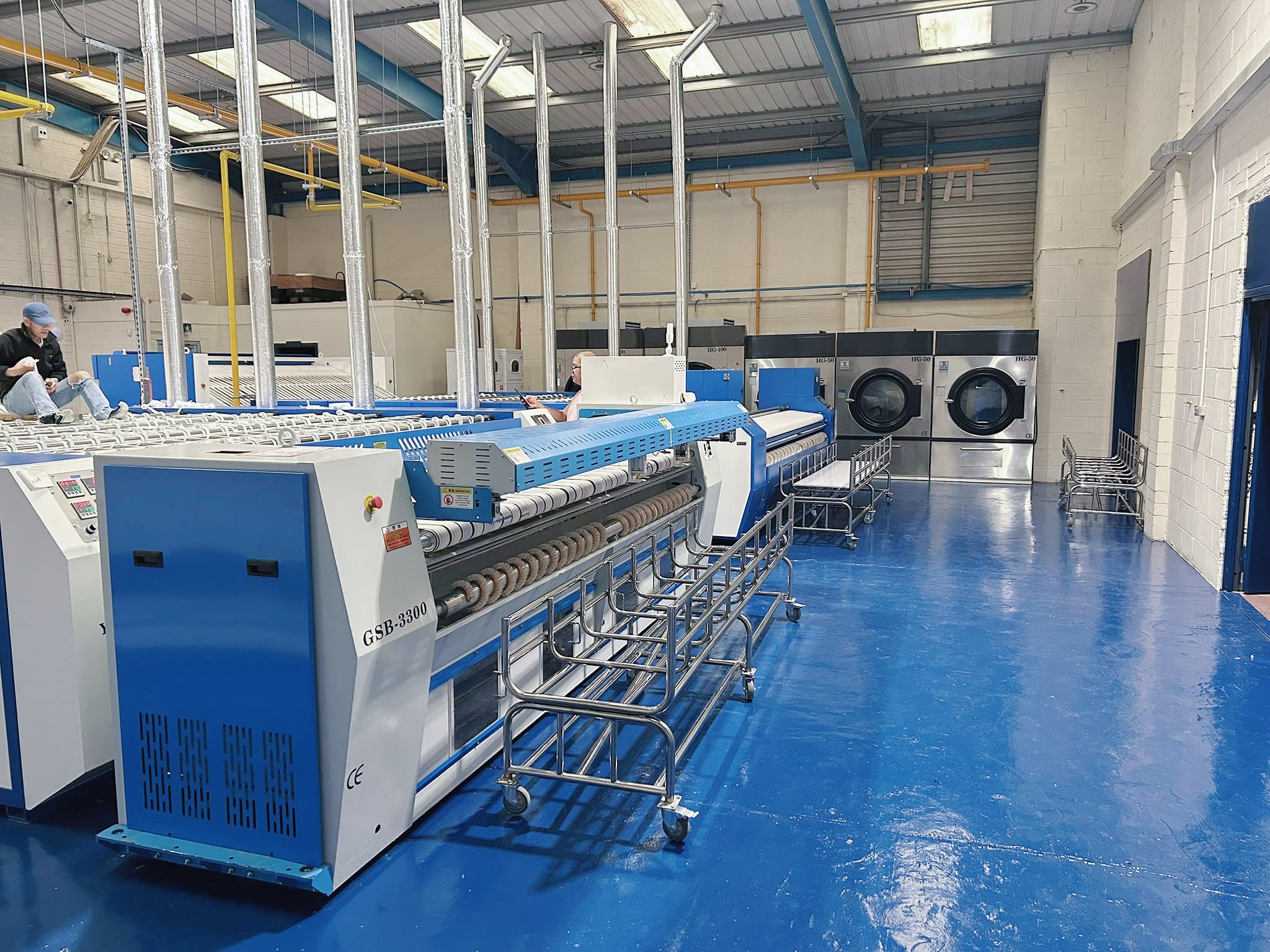
A fenti fénykép egy GSB-3300-as modellt mutat be egy holland kereskedelmi mosóüzemben. A berendezés elrendezése egyszerű. A tápláló egység az ironer-sor elején helyezkedik el. Mögötte a görgős vasaló nyomja a lapokat. A végén egy hajtógép fogadja a kész fehérneműt. Oldalt az HG-sorozatú szárítók kezelik az előszárított rakományokat, amelyeket közvetlenül a táplálóállomásra tolják.
Ez egy közepes méretű művelet. Nem volt szükségük teljes automatizálási átalakításra. El kellett távolítaniuk a kézi terítés szűk keresztmetszetét, és csökkenteniük kellett a munkavállalóikra nehezedő terhelést. Az egyállásos kialakítás kezeli napi mennyiségüket, és a kétmunkásos opció lehetővé teszi számukra a csúcsidőszakban fellépő megnövekedett igény kielégítését, amikor egy rotterdami szállodakliens megkétszerezte rendelését.
Nem minden műszakban azonos a munkaterhelés. A GSB-3300 mindkét forgatókönyvre alkalmazkodik.
Az egymunkásos üzemmód akkor a megfelelő választás, ha:
Ha ágyi takarók táplálóit hasonlítja össze, figyeljen ezekre a gyakorlati szempontokra:
Ez a mennyiségétől és a helyiség elrendezésétől függ.
Egyetlen állomásos táplálóberendezés általában a legnagyobb megtérülést biztosítja a következő esetekben:
Két gyakran figyelmen kívül hagyott részlet:
Padló mélysége. A takarófektető, a vasaló és a hajtógép folyamatos vonalként működik. A takarófektető az előtérben helyezkedik el, a vasaló és a hajtógép pedig mögötte. Győződjön meg arról, hogy a padlóterve elegendő mélységet biztosít a takarófektető mögött ahhoz, hogy az egész befejező berendezés elférjen anélkül, hogy az üzemeltetőknek körbe kellene járniuk a berendezéseket vagy forgalmi konfliktusokat kellett volna létrehozniuk.
Elektromos ellátás. Ellenőrizze, hogy a létesítménye képes-e kezelni a gép elektromos igényeit még a gép érkezése előtt. Egyes régiókban a feszültség stabilitása ingadozhat. Ennek korai ellenőrzése megakadályozza a beindítási késések fellépését.
Egyállásos ágytakaró-fektető nem lesz a legnagyobb gép a mosodájában. De a közepes méretű műveletek többségénél ez a gép szünteti meg a legnagyobb rejtett költséget: a vasalóvonalon pazarolt munkaórákat.
Gyakorlatias fejlesztés. Egyszerű a telepítése. Könnyű kezelni. Elég rugalmas ahhoz, hogy mind a normál, mind a csúcsidőszakokhoz alkalmazkodjon. Ha továbbra is kézzel fektetik le a takarókat, akkor a megtakarított idő általában már az első néhány hónapban megtéríti a beruházást.
Segítségre van szüksége egy ágylap-adagoló kiválasztásához a vasalósorához? Lépjen kapcsolatba a Flying Fish Machinery-vel a berendezés elrendezésének, a termelési mennyiségnek és az Ön működéséhez legmegfelelőbb konfigurációnak megbeszélése érdekében.
Copyright © 2024 Shanghai Flying Fish Machinery Manufacturing Co.,Ltd . ADATVÉDELMI IRÁNYELVEK
 EN
EN


 Friss hírek


