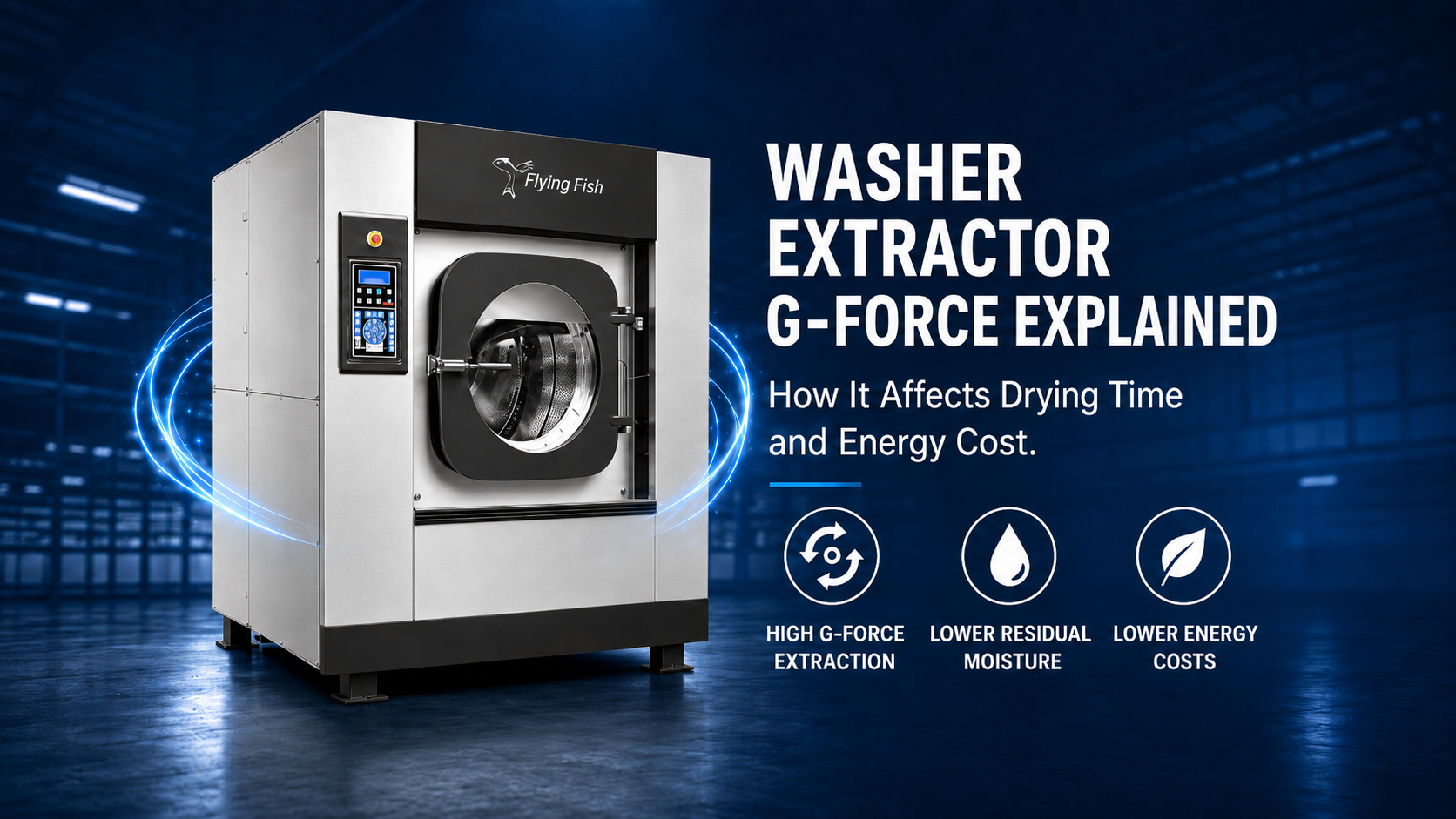
जानें कि वॉशर एक्सट्रैक्टर जी-फोर्स का क्या अर्थ है, यह आरपीएम से अधिक क्यों महत्वपूर्ण है, और उच्च-गति निकास कैसे सुखाने के समय, ऊर्जा उपयोग और लॉन्ड्री संचालन लागत को कम कर सकता है।
व्यावसायिक लॉन्ड्री में, धुलाई चक्र केवल लागत का एक हिस्सा है। एक बार जब लिनन वॉशर से बाहर निकल जाता है, तो कपड़े में फंसे हर किलोग्राम पानी को कहीं और से हटाना होता है—आमतौर पर गर्म टम्बल ड्रायर या फिनिशिंग लाइन द्वारा।
इसीलिए वॉशर एक्सट्रैक्टर का जी-फोर्स उस ध्यान के योग्य है जो अक्सर इसे प्राप्त नहीं होता। यह एक तकनीकी विशिष्टता की तरह दिख सकता है जो उत्पाद शीट में छुपी हुई है, लेकिन यह सीधे शुष्कन समय, उपयोगिता खपत, श्रम उत्पादकता और एक शिफ्ट में लॉन्ड्री द्वारा संसाधित लोड की संख्या को प्रभावित करता है।
होटलों, अस्पतालों, लॉन्ड्रोमैट्स, देखभाल सुविधाओं और औद्योगिक लॉन्ड्री संयंत्रों के लिए, सही एक्सट्रैक्शन प्रदर्शन संचालन लागत पर मापनीय अंतर ला सकता है। मुख्य बात यह समझना है कि जी-फोर्स का क्या अर्थ है, यह आरपीएम से कैसे भिन्न है, और कब उच्च एक्सट्रैक्शन गति वास्तविक मूल्य जोड़ती है।
अंतिम स्पिन के दौरान, ड्रम उच्च गति से घूमता है और बेलन में छिद्रों के माध्यम से जल को बाहर की ओर धकेलता है। जी-फोर्स भार पर लगाए गए त्वरण का वर्णन करता है, जो सामान्य गुरुत्वाकर्षण के संबंध में होता है।
300 जी का एक मानक इस बात को दर्शाता है कि ड्रम के बाहरी किनारे पर, भार गुरुत्वाकर्षण के कारण उत्पन्न त्वरण के लगभग 300 गुना त्वरण के संपर्क में है। व्यावहारिक लॉन्ड्री शब्दावली में, उच्च जी-बल आमतौर पर अनलोड करने से पहले कपड़ों से अधिक मुक्त जल को निकाल देता है।
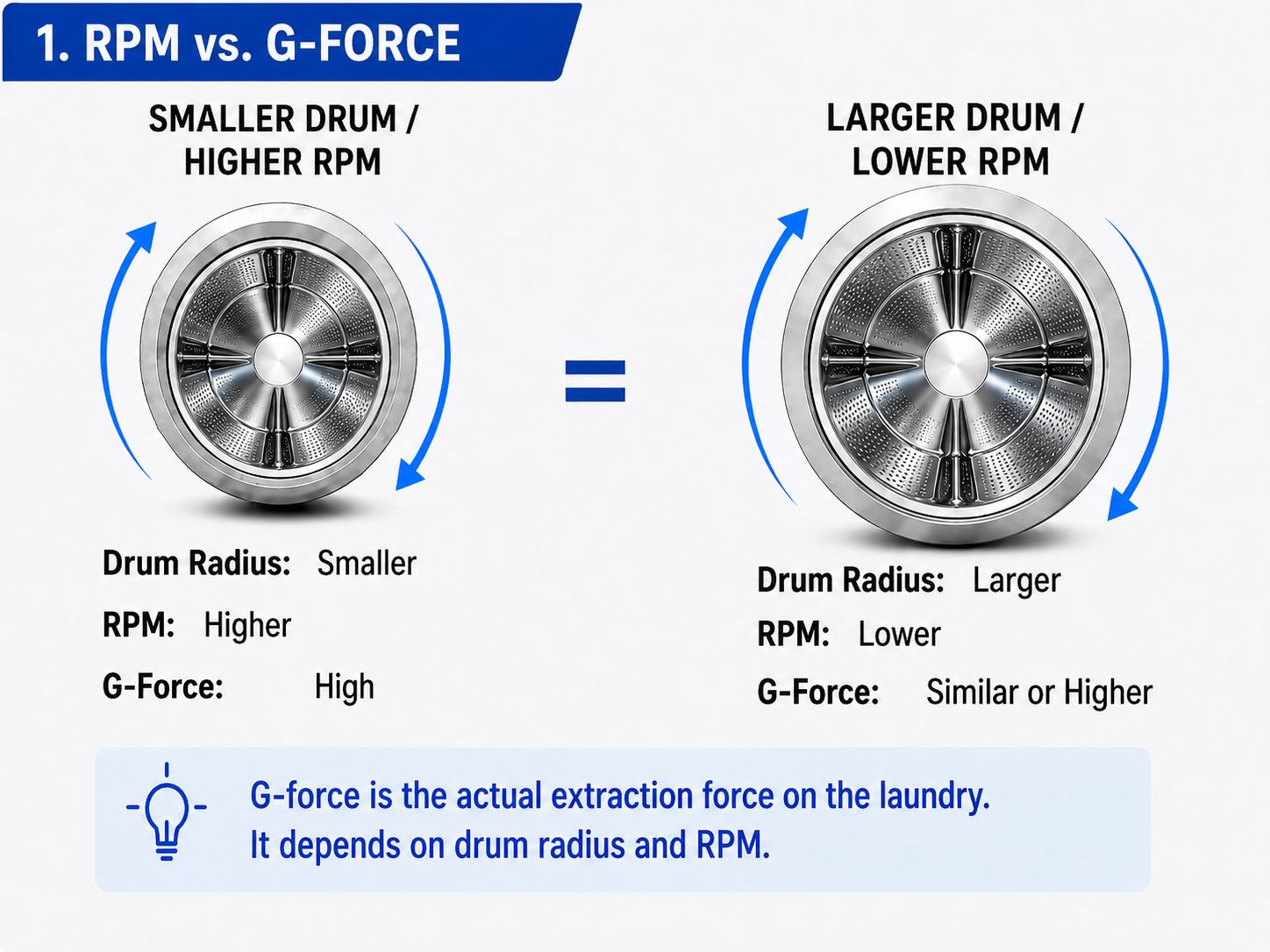
व्यावसायिक वॉशर एक्सट्रैक्टर के विनिर्देशों में ड्रम की गति और निष्कर्षण जी-बल दोनों का उल्लेख किया जा सकता है। आरपीएम (RPM) आपको बताता है कि ड्रम एक मिनट में कितनी बार घूमता है। जी-बल आपको उस गति और ड्रम की त्रिज्या द्वारा उत्पन्न निष्कर्षण प्रभाव के बारे में बताता है।
समान आरपीएम पर संचालित होने वाली दो मशीनें अलग-अलग ड्रम व्यास होने की स्थिति में समान जी-बल उत्पन्न नहीं कर सकती हैं। एक बड़ा ड्रम कम घूर्णन गति पर अधिक निष्कर्षण बल उत्पन्न कर सकता है, जबकि एक छोटा ड्रम समान परिणाम प्राप्त करने के लिए उच्च आरपीएम की आवश्यकता हो सकती है।
जी-बल ड्रम की त्रिज्या और घूर्णन गति के वर्ग के साथ बढ़ता है। इसलिए आरपीएम में तुलनात्मक रूप से छोटी वृद्धि निकास बल में काफी अधिक वृद्धि पैदा कर सकती है। यह मशीन के फ्रेम, बेयरिंग, ड्राइव सिस्टम, सस्पेंशन और संतुलन नियंत्रण पर भी अधिक आवश्यकताएँ लगाता है।
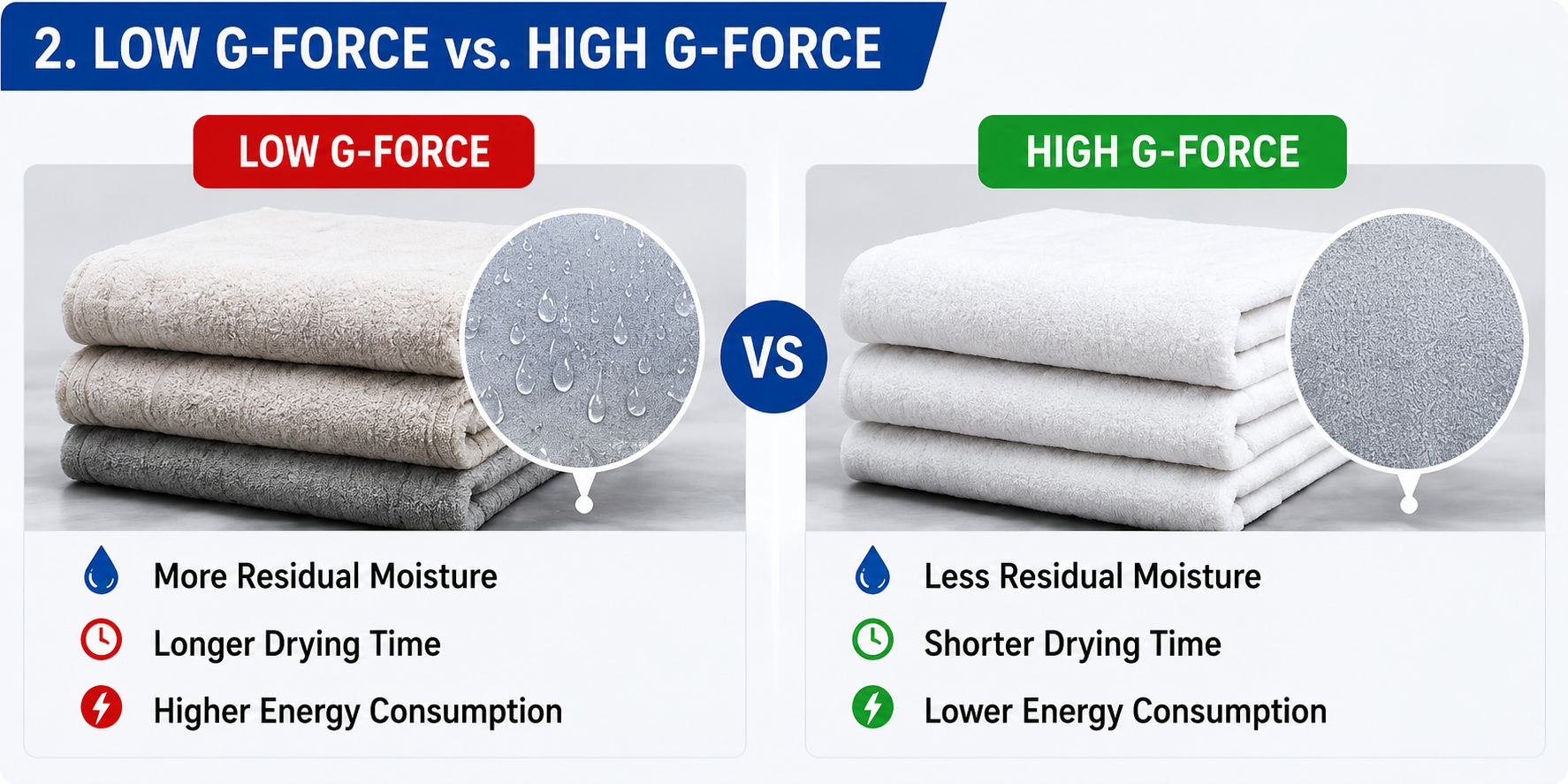
निकास के बाद, लिनन सूखा नहीं होता है। इसमें अभी भी अवशिष्ट नमी होती है, जिसे सामान्यतः शुष्क वस्त्र के भार के प्रतिशत के रूप में व्यक्त किया जाता है।
कल्पना कीजिए कि 50 किग्रा शुष्क तौलिये धोने के चक्र में प्रवेश करते हैं। यदि लोड वाशर से 30 किग्रा पानी के साथ बाहर आता है, तो उस पानी को शुष्क करने के लिए ड्रायर में वाष्पित किया जाना चाहिए। यदि अधिक शक्तिशाली निकास के कारण धारित पानी 22 किग्रा तक कम हो जाता है, तो ड्रायर को प्रत्येक लोड से 8 किग्रा कम पानी निकालना पड़ेगा।
सटीक परिणाम कपड़े के निर्माण, लोड का आकार, धुलाई केमिस्ट्री, निकास समय और मशीन के डिज़ाइन के अनुसार भिन्न होता है। मोटे सूती तौलिये हल्के पॉलिएस्टर चादरों की तुलना में अधिक नमी बनाए रखते हैं। ओवरलोडिंग से लोड के अंदर पानी फँस सकता है, जबकि अंडरलोडिंग से वॉशर एक्सट्रैक्टर को पूर्ण गति तक पहुँचने के लिए पर्याप्त संतुलन प्राप्त करने में बाधा आ सकती है।
सिद्धांत समान रहता है: कम शेष नमी का अर्थ है कमर्शियल टम्बल ड्रायर के लिए कम कार्य।
यह संबंध इतना महत्वपूर्ण है कि ENERGY STAR का वाणिज्यिक वॉशर दक्षता मापक लोड में छोड़ी गई नमी को हटाने के लिए आवश्यक ऊर्जा को शामिल करता है। अतः किसी वॉशर का वास्तविक ऊर्जा प्रदर्शन केवल धुलाई के दौरान उपयोग की गई बिजली और गर्म पानी पर निर्भर नहीं करता, बल्कि ड्रायर में होने वाली प्रक्रिया से भी जुड़ा होता है।
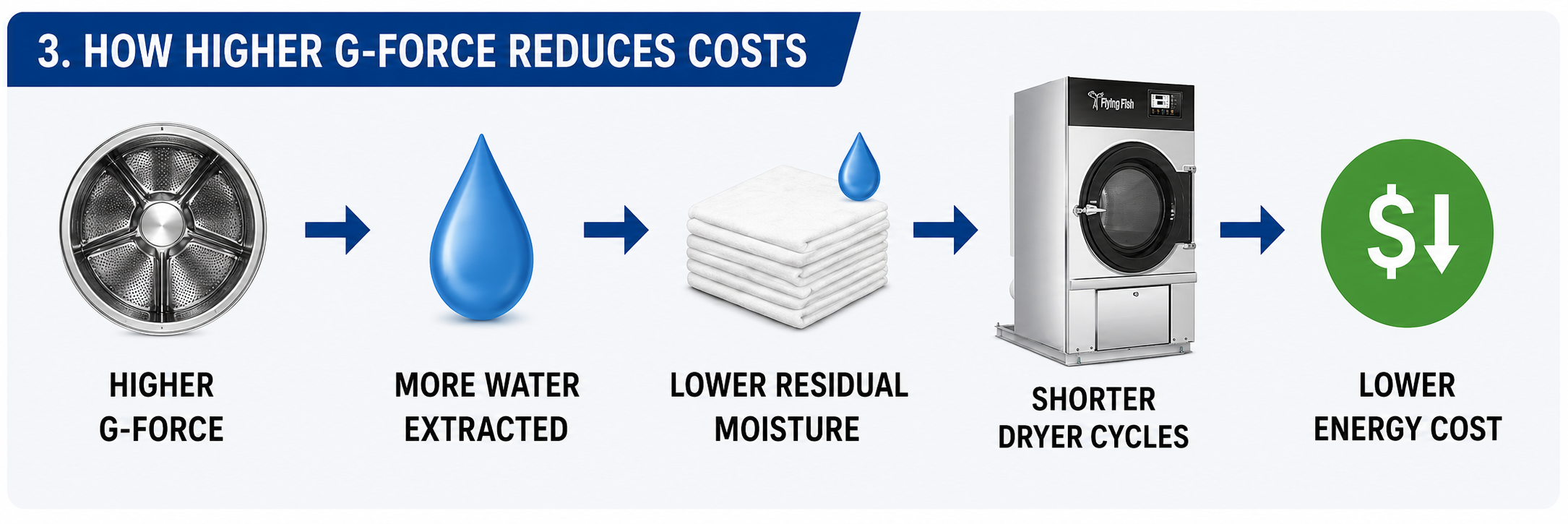
एक टम्बल ड्रायर लोड को गर्म करके, ड्रम के माध्यम से हवा को संचारित करके और आर्द्र हवा को बाहर निकालकर पानी को हटाता है। यह प्रक्रिया प्रभावी है, लेकिन बड़ी मात्रा में हवा को गर्म करने और उसे हिलाने के लिए ऊर्जा की आवश्यकता होती है।
एक वॉशर एक्सट्रैक्टर जल को यांत्रिक रूप से निकालता है। स्पिन चरण के दौरान अधिक नमी निकालना आमतौर पर उसी मात्रा में जल को ऊष्मा द्वारा वाष्पित करने की तुलना में अधिक कुशल होता है। अतः उच्च-गति निष्कर्षण, सुखाने के चक्रों को छोटा करने के लिए सबसे व्यावहारिक तरीकों में से एक है।
यह लाभ विशेष रूप से निम्नलिखित अवशोषक वस्तुओं के साथ स्पष्ट रूप से दिखाई देता है:
एक प्रकाशित वाणिज्यिक लॉन्ड्री उदाहरण में, निष्कर्षण को 90 G से बढ़ाकर 300 G करने से 60 पाउंड के टैरी टॉवल के भार के सुखाने का समय लगभग दस मिनट कम हो गया। वास्तविक परिणाम मशीन, भार के आकार, वस्त्र की रचना, वायु प्रवाह और ड्रायर की सेटिंग्स के अनुसार भिन्न हो सकते हैं, लेकिन यह उदाहरण दर्शाता है कि क्यों निष्कर्षण का प्रदर्शन सैकड़ों चक्रों तक दोहराए जाने पर महत्वपूर्ण होता है।
समतल कार्य (फ्लैटवर्क) के लिए, लाभ उत्पादन लाइन के निचले भाग में और अधिक स्पष्ट हो सकता है। अच्छी तरह से निकाले गए शीट्स को बेड शीट आयरनर में प्रवेश करने से पहले कम समय के लिए समायोजन (कंडीशनिंग) की आवश्यकता होती है। नमी का अधिक सुसंगत स्तर फिनिशिंग लाइन को चिकनी तरीके से चलाने में भी सहायता कर सकता है, जिससे धोने, सुखाने, इस्त्री करने और मोड़ने के बीच संकीर्णताएँ कम हो जाती हैं।
सुखाना अक्सर ऑन-प्रिमिसेज लॉन्ड्री या औद्योगिक लॉन्ड्री संयंत्र में सबसे अधिक ऊर्जा-गहन चरणों में से एक होता है।
गैस-संचालित सुखाने वाले उपकरण ईंधन का उपयोग करते हैं। विद्युत-संचालित सुखाने वाले उपकरण विद्युत आपूर्ति पर काफी भार डालते हैं। भाप-संचालित फिनिशिंग उपकरण भी शीट्स, तकिया के कवर, मेज के कपड़े और अन्य समतल कार्यों में शेष नमी को निकालने के लिए ऊर्जा का उपयोग करते हैं।
छोटे सुखाने के चक्र निम्नलिखित को कम कर सकते हैं:
एकल लोड से होने वाली बचत छोटी प्रतीत हो सकती है, लेकिन व्यावसायिक लॉन्ड्री उपकरण दिन में एक ही चक्र चलाते हैं बहुत कम ही। एक होटल लॉन्ड्री, अस्पताल लॉन्ड्री या लिनन सेवा प्रत्येक शिफ्ट के दौरान दर्जनों लोड का संसाधन कर सकती है।
प्रत्येक सुखाने के चक्र पर कुछ मिनट की बचत महीने भर में काफी सुखाने की क्षमता मुक्त कर सकती है।
उदाहरण के लिए, 20 सुखाने के चक्रों से आठ मिनट कम करने से एक दिन में सुखाने के उपयोग का समय 160 मिनट कम हो जाता है। ऊर्जा बचत पूर्णतः समानुपातिक नहीं होगी, क्योंकि वायु प्रवाह, बर्नर का संचालन, कपड़े का प्रकार, नमी संसर और ठंडा होने का समय भी खपत को प्रभावित करते हैं। फिर भी, लॉन्ड्री को अतिरिक्त उत्पादन समय प्राप्त होता है जबकि गरम उपकरणों के संचालन की अवधि कम हो जाती है।
इसी कारण से औद्योगिक लॉन्ड्री उपकरणों की तुलना करते समय केवल खरीद मूल्य को आधार बनाना भ्रामक हो सकता है।
कम कीमत वाला एक औद्योगिक वॉशर-एक्सट्रैक्टर, जिसका निष्कर्षण प्रदर्शन मामूली है, इससे जुड़े प्रत्येक ड्रायर पर अधिक कार्य स्थानांतरित कर सकता है। उपकरण के कार्यकाल के दौरान, अतिरिक्त ईंधन, बिजली, श्रम और उत्पादन का खोया हुआ समय शुरुआती बचत से अधिक हो सकता है।
एक अधिक उपयोगी तुलना वॉशर की केवल खरीद मूल्य के बजाय प्रसंस्कृत लिनन के प्रति किलोग्राम पूर्ण लागत को देखती है।
हमेशा नहीं।
उच्च निष्कर्षण को प्रसंस्कृत कपड़ों के अनुसार समायोजित किया जाना चाहिए। भारी सूती तौलिये आमतौर पर शक्तिशाली निष्कर्षण से लाभान्वित हो सकते हैं। नाजुक कपड़े, जलरोधी वस्तुएँ, मिश्रित सामग्री और कुछ स्वास्थ्य सेवा संबंधी कपड़े कम गति या कोमल त्वरण प्रोफाइल की आवश्यकता हो सकती है।
इसके अतिरिक्त, प्रतिफलों में कमी भी आती है। एक बार जब अधिकांश निकाले जा सकने वाला जल निकाल दिया जाता है, तो अधिक तेज़ गति से घूमना या उच्च-गति चरण को बढ़ाना केवल शेष नमी में थोड़ी ही अतिरिक्त कमी उत्पन्न कर सकता है।
कुछ वाणिज्यिक लॉन्ड्री उपकरण निर्माताओं ने ध्यान दिया है कि अत्यधिक जी-बल स्तरों पर नमी निकालने के लाभ घटने लगते हैं। इस बिंदु से अधिक निकास गति बढ़ाने से यांत्रिक तनाव में वृद्धि हो सकती है, लेकिन सुखाने के समय में समान रूप से बड़ी कमी नहीं होगी।
इसलिए, एक अच्छी तरह से डिज़ाइन किया गया धोने का कार्यक्रम प्रत्येक लोड पर अधिकतम गति लागू करने के बजाय सही निकास प्रोफ़ाइल का उपयोग करना चाहिए।
आधुनिक प्रोग्राम करने योग्य वॉशर एक्सट्रैक्टर्स ऑपरेटरों को निम्नलिखित को समायोजित करने की अनुमति देते हैं:
लक्ष्य केवल विशिष्टता पत्रक पर उच्चतम संख्या का चयन करना नहीं है। यह बिना कपड़ों को क्षति पहुँचाए, अत्यधिक झुर्रियाँ बनाए या मशीन पर अनावश्यक तनाव डाले, व्यावहारिक रूप से सबसे कम शेष नमी प्राप्त करना है।
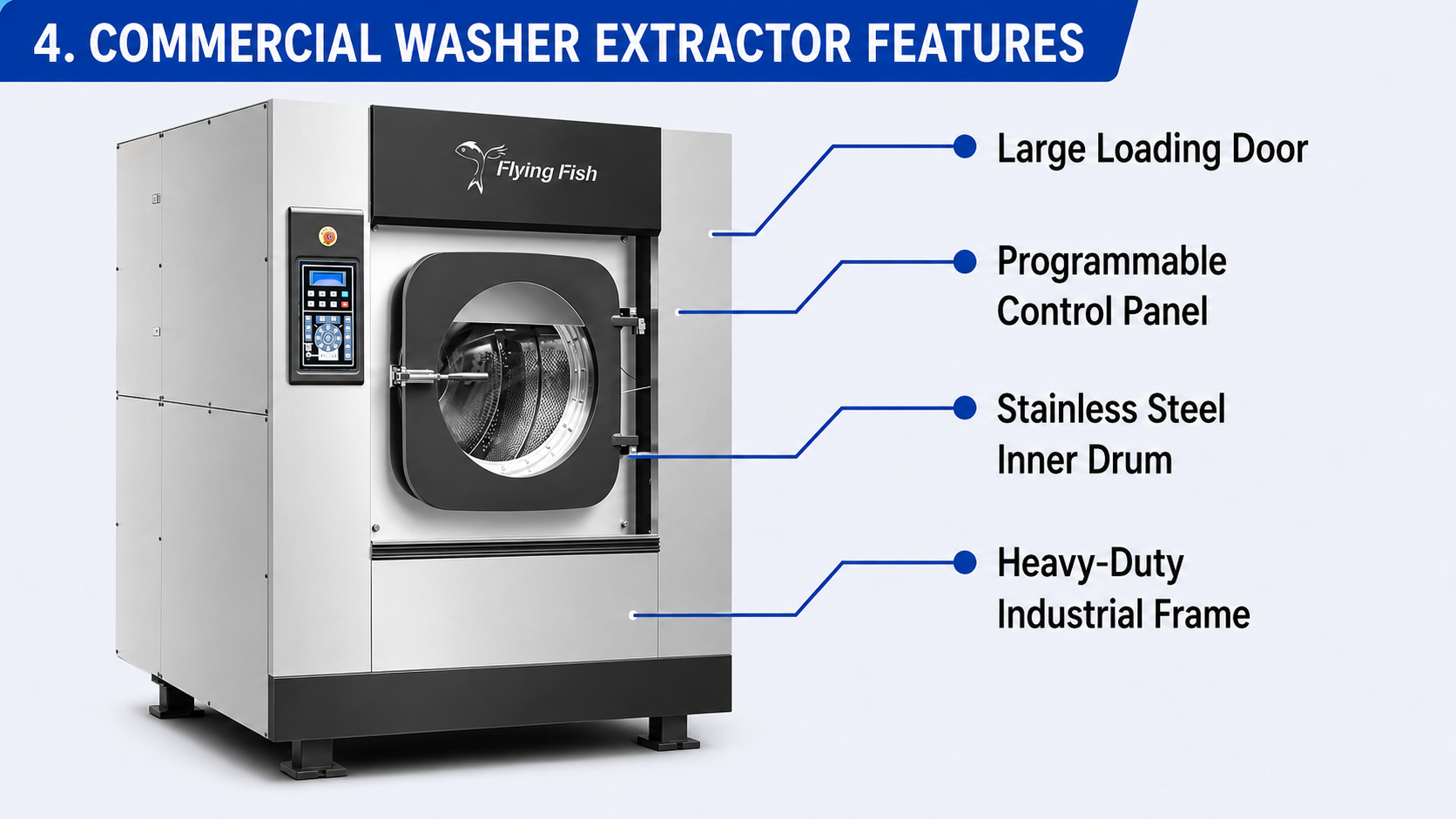
मशीन का निर्माण व्यावसायिक लॉन्ड्री में उपलब्ध निष्कर्षण प्रदर्शन को भी प्रभावित करता है।
एक हार्ड-माउंट वॉशर एक्सट्रैक्टर एक प्रबलित कंक्रीट फाउंडेशन से स्थायी रूप से जुड़ा होता है। चूँकि अधिक कंपन भवन की संरचना में स्थानांतरित किया जाता है, इसलिए फाउंडेशन के डिज़ाइन, एंकरिंग और स्थापना की गुणवत्ता अत्यंत महत्वपूर्ण है।
एक सॉफ्ट-माउंट वॉशर एक्सट्रैक्टर कंपन को भवन से अलग करने के लिए स्प्रिंग्स, शॉक अवशोषक और संतुलन नियंत्रण का उपयोग करता है। यह कई निलंबित मशीनों को उच्च स्पिन गति पर संचालित करने की अनुमति देता है, जबकि फर्श पर स्थानांतरित बल को कम करता है।
सॉफ्ट-माउंट व्यावसायिक लॉन्ड्री उपकरण को अक्सर होटलों, अस्पतालों, ऊपरी मंजिल के लॉन्ड्री कमरों और उन सुविधाओं के लिए विचार किया जाता है जहाँ प्रमुख फाउंडेशन कार्य कठिन या महंगा होगा।
हालांकि, "सॉफ्ट-माउंट" शब्द को स्वतः ही बेहतर प्रदर्शन की गारंटी के रूप में नहीं माना जाना चाहिए। खरीदारों को प्रत्येक मशीन के वास्तविक G-बल, उपयोग में लाए जा सकने वाली क्षमता, चक्र लचीलापन, अवशेष नमी के परिणाम, स्थापना आवश्यकताएँ, कंपन नियंत्रण और सेवा तक पहुँच की तुलना करनी चाहिए।
फ्लाइंग फिश सॉफ्ट-माउंट वॉशर एक्सट्रैक्टर स्थिर संचालन का समर्थन करने और कंपन को कम करने के लिए निलंबित संरचना, आवृत्ति-नियंत्रित एक्सट्रैक्शन और शॉक-अवशोषण घटकों का उपयोग करते हैं।
एक वॉशर एक्सट्रैक्टर की नामांकित गति शानदार हो सकती है, फिर भी दैनिक संचालन में असंगत परिणाम प्रदान कर सकता है।
चादरें एक-दूसरे के चारों ओर लपेट सकती हैं, जबकि मिश्रित वस्तुएँ ड्रम के एक ओर एकत्रित हो सकती हैं। जब नियंत्रण प्रणाली अत्यधिक असंतुलन का पता लगाती है, तो वह मशीन की सुरक्षा के लिए स्पिन गति को कम कर सकती है।
फिर चक्र सामान्य रूप से पूरा हो सकता है, लेकिन लोड वॉशर से अपेक्षित से अधिक अवशेष नमी के साथ बाहर आएगा।
अधिक लोडिंग की सीमा कपड़ों के गति को सीमित कर देती है और पानी को दबाए गए लोड के अंदर फँसा सकती है। बहुत छोटे लोड को भी ड्रम के चारों ओर समान रूप से वितरित करना कठिन हो सकता है।
अनुशंसित लोडिंग क्षमता का पालन करना महत्वपूर्ण है, लेकिन ऑपरेटरों को सामान के आयतन और अवशोषण क्षमता को भी ध्यान में रखना चाहिए। एक किलोग्राम तौलिये, एक किलोग्राम हल्के चादरों से अलग व्यवहार करते हैं।
कुछ सेकंड के लिए केवल लक्ष्य G-बल तक पहुँचना उसी परिणाम को प्राप्त करने के लिए पर्याप्त नहीं हो सकता जो सही समय तक स्थिर निष्कर्षण गति को बनाए रखने से प्राप्त होता है।
एक अच्छी तरह से प्रोग्राम किए गए चक्र में कपड़ों से पानी को बाहर निकलने और मशीन से दूर निकलने के लिए पर्याप्त समय का प्रावधान होना चाहिए।
अवरुद्ध पाइप, सीमित ड्रेन वाल्व, गलत पाइप आयाम या खराब फर्श ड्रेनेज प्रणाली निष्कर्षण के दौरान प्रणाली के अंदर पानी छोड़ सकती है। इससे चक्र की अवधि बढ़ सकती है और नमी निकालने की क्षमता कम हो सकती है।
बेल्ट्स, बेयरिंग्स, शॉक अब्ज़ॉर्बर्स, सेंसर्स और ड्राइव घटक सभी स्थिर उच्च-गति संचालन को प्रभावित करते हैं। यदि कोई मशीन बार-बार संतुलन बनाए रखने या पूर्ण गति प्राप्त करने में असमर्थ रहती है, तो इसकी जाँच की आवश्यकता हो सकती है, न कि केवल एक साधारण कार्यक्रम समायोजन की।
नाजुक कपड़ों के लिए डिज़ाइन किए गए कार्यक्रमों में अंतिम स्पिन के लिए जानबूझकर कम गति का उपयोग किया जा सकता है। ऑपरेटरों को यह सुनिश्चित करना चाहिए कि चुना गया कार्यक्रम वास्तव में संसाधित किए जा रहे माल के अनुरूप है।
लॉन्ड्री प्रबंधकों को मशीन के नामपट्ट (नेमप्लेट) पर केवल भरोसा करने के बजाय वास्तविक प्रदर्शन को मापना चाहिए। एक सरल विधि यह है कि एक प्रतिनिधित्वपूर्ण शुष्क लोड को तौला जाए और निकास के बाद फिर से तौला जाए। समय के साथ शेष नमी की निगरानी करने से मशीन की स्थिति, लोडिंग प्रथाओं, कार्यक्रम सेटिंग्स या टेक्सटाइल व्यवहार में परिवर्तनों का पता लगाया जा सकता है।
अपनी सुविधा द्वारा प्रतिदिन किए जाने वाले कार्य से शुरुआत करें।
तौलियों और सूती चादरों की बड़ी मात्रा को संसाधित करने वाले होटल के लिए तीव्र निकास और छोटे ड्रायर चक्रों पर अधिक महत्व दिया जा सकता है।
एक अस्पताल की लॉन्ड्री को विभिन्न स्वच्छता और कपड़े की श्रेणियों के लिए सावधानी से नियंत्रित कार्यक्रमों की आवश्यकता हो सकती है।
एक स्व-सेवा लॉन्ड्रोमैट के लिए चक्र की गति, ग्राहक अनुभव, उपकरण की टिकाऊपन और उपयोगिता लागत पर प्राथमिकता हो सकती है।
एक औद्योगिक लॉन्ड्री संयंत्र को कार्य-वस्त्र, फ्लैटवर्क, तौलिये, वर्दी और विशेष वस्तुओं के लिए कई निष्कर्षण सेटिंग्स की आवश्यकता हो सकती है।
व्यावसायिक वॉशर एक्सट्रैक्टर्स की तुलना करते समय आपको आपूर्तिकर्ता से निम्नलिखित प्रश्न पूछने चाहिए:
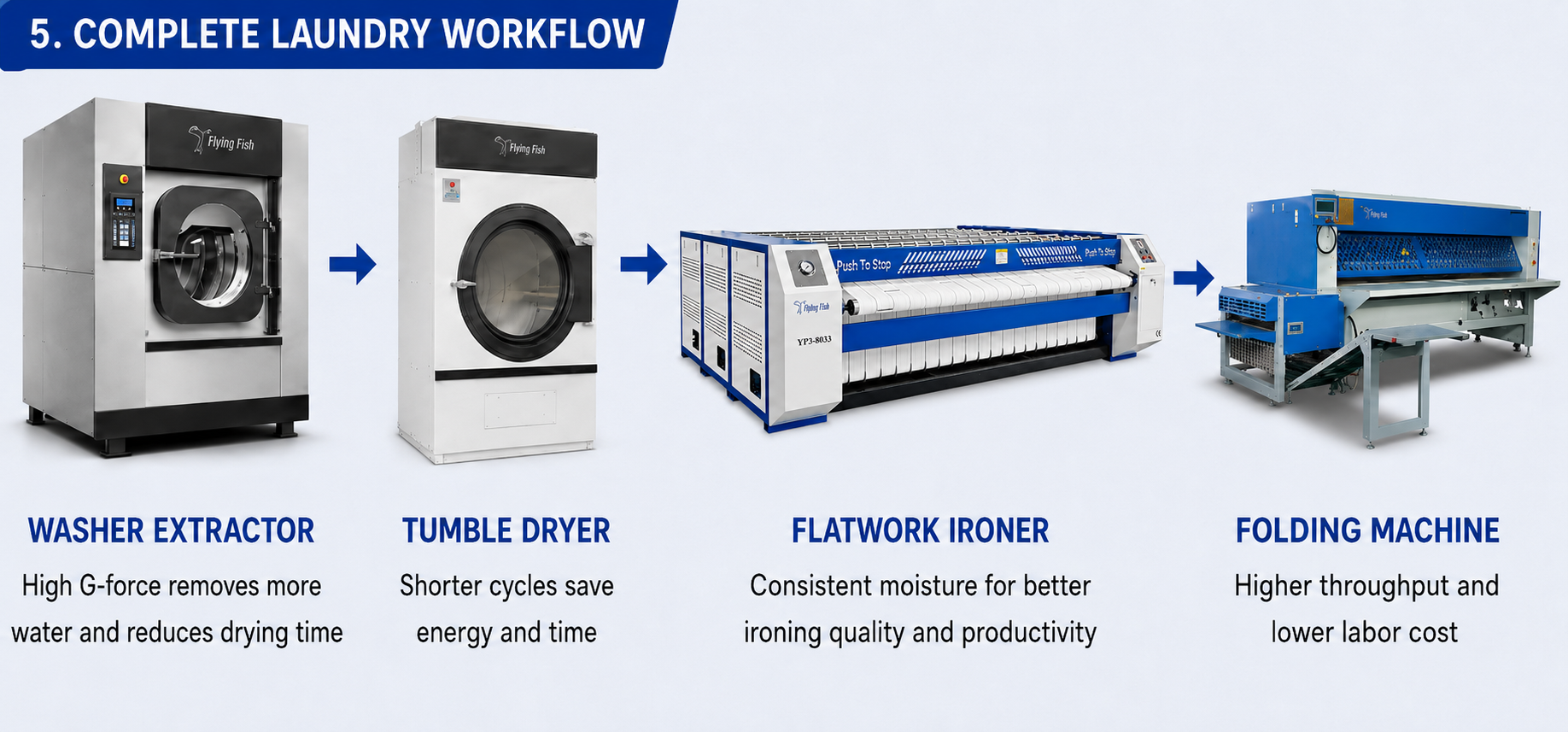
पूर्ण लॉन्ड्री कार्यप्रवाह धोने वाली मशीन के समान ही महत्वपूर्ण है।
एक उच्च-गति औद्योगिक धोने वाली मशीन एक नया बोटलनेक उजागर कर सकती है, यदि अनलोडिंग, सामग्री हैंडलिंग, सुखाना, इस्त्री या मोड़ने की क्षमता पर्याप्त न हो। सर्वोत्तम व्यावसायिक लॉन्ड्री समाधान प्रत्येक चरण को लगभग समान गति से आगे बढ़ाता है।
उदाहरण के लिए, यदि साफ लिनन एक छोटी इस्त्री लाइन के सामने प्रतीक्षा कर रहा है, तो धोने वाली मशीन के चक्र और सूखाने के समय को कम करने से सीमित लाभ होगा। अतः उपकरण का चयन कुल दैनिक उत्पादन, शिखर घंटे की मांग, कपड़े के प्रकार, उपलब्ध उपयोगिताओं और आवश्यक टर्नअराउंड समय के आधार पर किया जाना चाहिए।
धोने वाली मशीन का G-बल केवल एक इंजीनियरिंग संख्या नहीं है। यह इस बात को प्रभावित करता है कि धोने वाली मशीन से कितना पानी निकलता है, सूखाने वाली मशीन को कितनी देर तक चलाना पड़ेगा, लिनन कितनी जल्दी फिनिशिंग लाइन तक पहुँचता है, और एक लॉन्ड्री प्रतिदिन कितने लोड पूरे कर सकती है।
उच्च G-बल आमतौर पर कम अवशेष नमी और छोटे सुखाने के समय का अर्थ होता है, लेकिन सर्वोत्तम परिणाम कपड़े, लोड, मशीन के निर्माण और समग्र उत्पादन प्रणाली के अनुसार निकासन प्रदर्शन को संरेखित करने से प्राप्त होता है।
औद्योगिक लॉन्ड्री उपकरणों का मूल्यांकन करते समय, केवल क्रय मूल्य के बजाय कुल संचालन लागत की तुलना करें। उचित रूप से चुना गया उच्च-G वॉशर एक्सट्रैक्टर व्यावसायिक टम्बल ड्रायरों पर डाले गए कार्यभार को कम कर सकता है, लॉन्ड्री के प्रवाह को बेहतर बना सकता है और उपकरण के कार्यकाल के दौरान ऊर्जा और श्रम लागत को नियंत्रित करने में सहायता कर सकता है।
फ्लाइंग फिश आपूर्ति करता है औद्योगिक वाशर एक्सट्रैक्टर और मृदु-माउंट वाशर एक्सट्रैक्टर होटलों, अस्पतालों, वाणिज्यिक लॉन्ड्री और औद्योगिक लॉन्ड्री सुविधाओं के लिए। यह उपकरण प्रोग्राम करने योग्य नियंत्रण, इन्वर्टर-चालित निष्कर्षण, स्टेनलेस स्टील के निर्माण और मांगपूर्ण वाणिज्यिक लॉन्ड्री वातावरण के लिए विकसित निलंबित डिज़ाइनों को एकीकृत करता है।
प्रत्येक लॉन्ड्री परियोजना का मूल्यांकन इसके लिनन के आयतन, मुख्य कपड़े की श्रेणियों, सुविधा की स्थितियों, उपयोगिता आपूर्ति और उत्पादन लक्ष्यों के अनुसार किया जाना चाहिए।
सही जी-फोर्स केवल उच्चतम उपलब्ध स्तर नहीं है। यह वह स्तर है जो नमी निकास, वस्त्र देखभाल, दैनिक उत्पादन क्षमता और दीर्घकालिक संचालन लागत के बीच सर्वोत्तम संतुलन बनाता है।
Copyright © 2024 Shanghai Flying Fish Machinery Manufacturing Co.,Ltd . गोपनीयता नीति
 EN
EN


 गर्म समाचार


