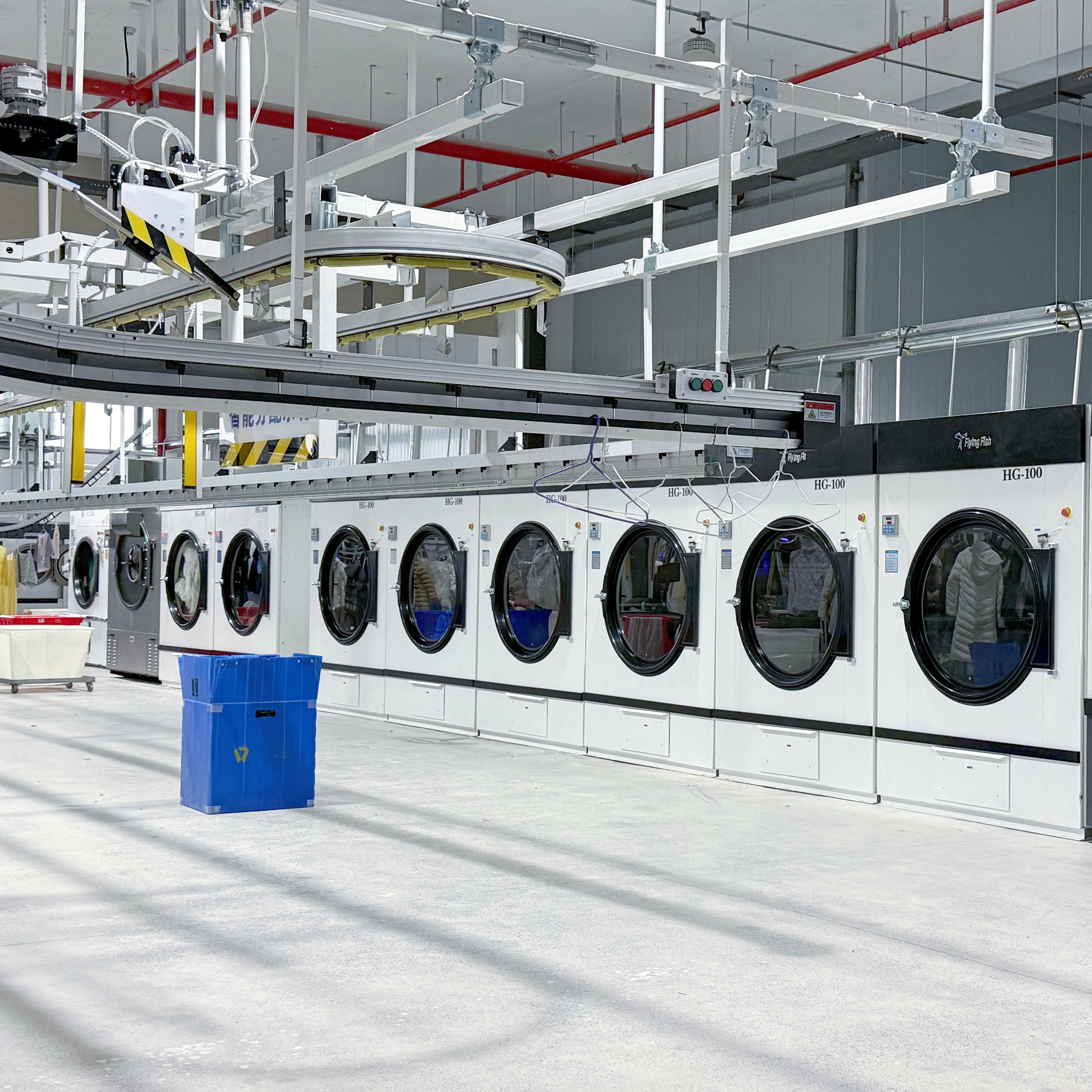
A commercial laundry may have reliable machines and experienced operators but still struggle to complete daily orders on time.
The problem is often not a lack of equipment. It is an imbalance between washing, drying and finishing. Washers may finish faster than dryers can handle the wet linen. Dryers may work efficiently, but sheets can still pile up before ironing and folding. When one stage cannot keep up with the others, it becomes a production bottleneck.
Understanding where the delay happens can help a laundry improve output without immediately buying more machines.
A bottleneck is the slowest stage in the laundry process. It limits the output of the entire production line.
Common signs include:
● Wet linen waiting for an available dryer
● Dry sheets piling up beside the ironer
● Washers stopping because there are no empty carts
● Operators waiting for linen from another department
● Finished linen being delayed before folding or packing
● Frequent overtime despite normal daily volume
The easiest way to identify a bottleneck is to observe where linen waits the longest.
Machine capacity is usually shown as the dry weight each machine can process per load. However, rated capacity does not always equal actual hourly output.
Real production is also affected by:
● Wash and drying cycle time
● Fabric type
● Residual moisture after extraction
● Loading and unloading time
● Operator experience
● Equipment downtime
● Rewash rates
● Time spent moving linen between departments
A washer may process a large load, but if the drying stage takes much longer, wet linen will continue to accumulate.
Before changing the equipment layout, record the actual processing and waiting time at each stage for several working days.
Washing may be the limiting stage when soiled linen continues to build up while dryers and finishing machines are waiting.
Possible causes include:
One large washer may be efficient for bulk loads, but it may not be flexible enough when different fabrics, colours or soil levels must be washed separately.
Using a combination of different washer extractor capacities can make production scheduling easier.
Not every load requires the same wash formula. Using long programs for lightly soiled linen reduces daily throughput.
Wash programs should be selected according to linen type and soil level. However, cycles should not be shortened without checking the washing and rinsing results.
Overloading may reduce linen movement and affect washing, rinsing and extraction. Underloading can waste machine capacity.
Using measured load weights instead of visual estimates helps create more consistent production.
Drying is a common source of delay because drying time varies according to fabric type, load size and moisture content.
Signs of a drying bottleneck include:
● Wet linen carts waiting near the dryers
● Washers being stopped because carts are unavailable
● Linen being removed before it is evenly dry
● Loads requiring additional drying
● Operators mixing different fabric types to save time
Before adding another industrial tumble dryer, check whether the existing process can be improved.
The more water left in the linen after washing, the longer the dryer must operate.
A properly selected washer extractor can help reduce residual moisture before drying. Operators should also make sure that loads are balanced and that the correct extraction settings are used.
Restricted airflow can increase drying time.
Lint filters, air inlets and exhaust ducts should be cleaned and inspected regularly according to the equipment manufacturer’s instructions.
Heavy towels and lightweight sheets do not dry at the same speed.
Drying similar fabrics together can improve consistency and reduce the risk of overdrying some items while others remain damp.
Washing and drying are only part of the commercial laundry workflow.
Hotels, hospitals and linen rental companies may also need to feed, iron, fold, count and stack large quantities of flatwork.
A high-capacity ironer cannot reach its expected output when operators cannot feed sheets quickly or consistently.
Finishing output may be affected by:
● Linen size
● Residual moisture
● Feeding accuracy
● Operator skill
● Ironer speed
● Folding requirements
● Equipment compatibility
For larger flatwork volumes, a coordinated finishing line may include a bed sheet feeder, flatwork ironer and automatic folding machine.
Towels normally follow a different process and may be sent from the dryer directly to a towel folding machine or manual folding station.
Separating sheet and towel production can reduce interruptions and improve workflow.
Even correctly sized equipment can perform poorly when the laundry room layout creates unnecessary movement.
Common layout problems include:
● Wet linen travelling too far from washers to dryers
● Clean and soiled linen crossing the same route
● Narrow aisles blocking linen carts
● Finished linen returning through the washing area
● Insufficient space for loading and unloading
● Limited maintenance access behind machines
A practical laundry layout should allow linen to move forward through each stage:
Sorting → Washing → Extraction → Drying → Finishing → Packing
Reducing unnecessary handling can save time without changing the equipment.
A production queue does not always mean that another machine is required.
Try improving the existing workflow first:
● Standardise load weights
● Separate linen by fabric type
● Adjust staff schedules during peak hours
● Clean lint filters regularly
● Stager washer starting times
● Reduce unnecessary cart movement
● Use suitable wash and drying programs
● Schedule preventive maintenance outside busy periods
● Train operators on loading and feeding procedures
After making changes, measure the waiting time again.
When the same stage continues to delay production, additional equipment or a different capacity combination may be necessary.
The fastest individual machine does not always create the most efficient laundry.
Washer extractors, tumble dryers and finishing equipment should be selected as one connected production system. Their capacities should match the actual linen volume, fabric mix, operating hours, available labour and utility conditions.
Before requesting an equipment proposal, prepare the following information:
● Daily dry-linen weight
● Peak daily volume
● Main linen types
● Required working hours
● Existing equipment
● Available floor space
● Water, electricity, gas or steam conditions
● Current production delays
Flying Fish provides commercial and industrial laundry equipment for washing, drying and finishing applications. A complete equipment plan should be based on the customer’s real production requirements rather than a standard machine list.
When a commercial laundry is running slowly, the first step is not always purchasing more equipment.
Observe where linen waits, measure actual cycle times and check whether the delay comes from machine capacity, operators, maintenance or layout.
A balanced workflow helps reduce waiting time, improve equipment utilisation and make future expansion easier.
Copyright © 2024 Shanghai Flying Fish Machinery Manufacturing Co.,Ltd . Privacy Policy
 EN
EN


 Hot News


